The average German two-person household could cut its annual food spending by around €1,315 by switching to a diet built around the Planetary Health Diet
That is a common misconception. The costs are generally lower both in real world and modeling. Local or seasonal has less to do with it. Things like rice, tofu, beans, lentils, etc are generally cheaper. Things like beyond meat are only pricier because of R&D costs and economies of scale. Even still those have reached parity in a number of countries
Evidence from studies published between 2000 and 2025 indicates that whole-food PBDs [plant-based diets] are generally associated with lower food expenditures than omnivorous diets across diverse geographic contexts
Based on primary data (n = 1040) collected through an online survey, representative of the Portuguese population, through logistic regressions, it was possible to conclude that plant-based consumers, particularly vegan, are associated with lower food expenditures compared to omnivorous consumers. In fact, plant-based consumers are shown to spend less than all other consumers assessed
Thanks for the reply and links. Thats really interesting! I just restarted eating meats after a 10 year hiatus and apparently i budget meat in the oh-i-feel-fancy-today budget. It seems i misattributed the effect of inflation specifically to veggies. Anyways, here is the table from from Springmann et al 2021 (cited in the oxford link above). I converted 2017 US $ to 2026 EUR (shady, i know) and then to EUR/kg to get a somewhat familiar metric. It seems somewhat plausible:
#!/usr/bin/env -S awk -F '\t' -f

{
    printf("|");
    for (i = 1; i <= NF; i++) {
        # Note: if a field contains the character `|`,
        # it will mess up the table.
        # In this case, we should replace this character
        # by something else e.g. `,`:
        gsub(/\|/, ",", $i);
        printf(" %s |", $i);
    }
    printf("\n");
}

NR==1 { # Output the delimiting line
    printf("|");
    for(i = 1; i <= NF; i++) {
        printf(" --- | ");
    }
    printf("\n");
}
Inflation is actually significantly higher on many animal products, so the gap is almost certainly stronger than that study too
Partially because of problems everyone has been warning about that the industry around the world has happily ignored in order to keep growing. For instance, for beef, drought related to climate change has been a big factor. For various different types of meat because of disease which these system help create and spread
And increases to plant prices affect meat more because meat production inherently requires more plants for feed (it takes a lot of feed per farm animal since most of the feed energy is lost)


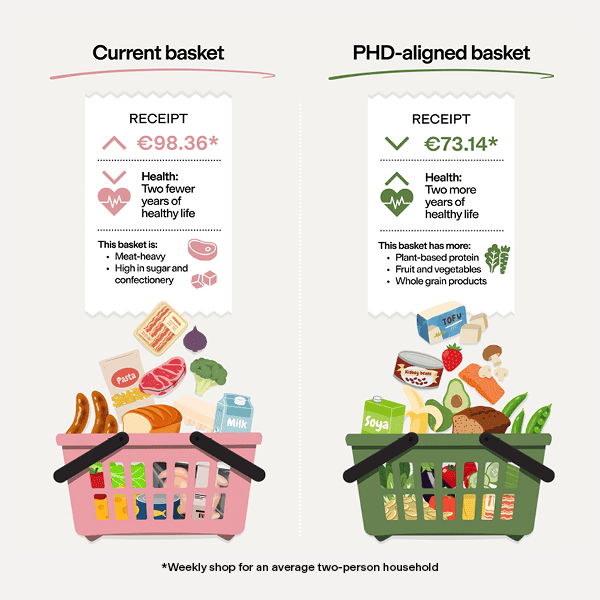
here is the link to the original study:
https://cdn.prod.website-files.com/677d312731ae664a70dacd6c/6a70bb8a55a62025e08f85d1_Madre-Brava-Healthy-Returns-Report.pdf
method section https://cdn.prod.website-files.com/677d312731ae664a70dacd6c/6a70ba9edadd78d8fc6e62f2_Madre-Brava-Healthy-Returns-Appendix.pdf
couldn’t find a link to the raw data. maybe someone (ahem, me) should ask for it.
I’m interested because i find that meatless diet can be quite expensive, unless you stick to hyper local, hyper seasonal.
That is a common misconception. The costs are generally lower both in real world and modeling. Local or seasonal has less to do with it. Things like rice, tofu, beans, lentils, etc are generally cheaper. Things like beyond meat are only pricier because of R&D costs and economies of scale. Even still those have reached parity in a number of countries
https://www.academia.edu/3067-1345/3/1/10.20935/AcadNutr8137#sec7-Acad.Nutri.-3-319439
For some specific studies
https://www.ox.ac.uk/news/2021-11-11-sustainable-eating-cheaper-and-healthier-oxford-study
For some studies looking at spending around the world
https://www.sciencedirect.com/science/article/abs/pii/S0921800915301488?via=ihub [US]
https://agrifoodecon.springeropen.com/articles/10.1186/s40100-022-00224-9
Thanks for the reply and links. Thats really interesting! I just restarted eating meats after a 10 year hiatus and apparently i budget meat in the oh-i-feel-fancy-today budget. It seems i misattributed the effect of inflation specifically to veggies. Anyways, here is the table from from Springmann et al 2021 (cited in the oxford link above). I converted 2017 US $ to 2026 EUR (shady, i know) and then to EUR/kg to get a somewhat familiar metric. It seems somewhat plausible:
https://ora.ox.ac.uk/objects/uuid:95ab5488-5945-4e83-8871-9c54fa2943e5
Note. (in case it might be useful) Table was converted from selection in libreoffice calc to markdown via
$ xclip -out -selection "clipboard" | ./tsv2md.awk | xclip -selection "clipboard"with
./tsv2md.awkfrom https://gaultier.github.io/blog/tip_of_day_3.html:Inflation is actually significantly higher on many animal products, so the gap is almost certainly stronger than that study too
Partially because of problems everyone has been warning about that the industry around the world has happily ignored in order to keep growing. For instance, for beef, drought related to climate change has been a big factor. For various different types of meat because of disease which these system help create and spread
And increases to plant prices affect meat more because meat production inherently requires more plants for feed (it takes a lot of feed per farm animal since most of the feed energy is lost)