

5·
1 year agoI love this article.
The first time I read it I felt like someone finally understood.

Buy, Sell, Eat, Repeat,
Buy, Sell, Eat, Repeat,
Buy, Sell, Eat, Repeat,
Buy, Sell, Eat, Repeat.
I love this article.
The first time I read it I felt like someone finally understood.
This is the tricky nature of “value”, isn’t it?
Something can be both valuable and detrimental to humanity.

If you’d gotten this response to asking the question “How is the game played?” to someone insinuating that they knew how the game was played, would you feel that you’d gotten a satisfactory answer?
How is the game played?

We’re In Hell is a fantastic channel with excellent, well researched content. Easily in my top 3 these days, along with PlasticPills and SomeMoreNews.
“trump banner dc”
You’ll find it to be a very effective search engine query.

You’re not being a jerk, you’re being pedantic.
Ignorant is absolutely the better word, and I should have used it.
I think, however, that people are far more capable of gaining intelligence than we give them credit for. I don’t believe that IQ is assigned at birth, and it’s been shown that the entire idea of IQ testing is extremely flawed.
There are people born with learning disabilities, of course, but that’s a whole other conversation.
As much as I love these quotes, I think it’s important to qualify them:
Everyone is born stupid, but people can be educated. If we want an educated populace, we must put in the work to create functional systems of education, and celebrate intelligence as a society. It’ll be hard work, and there are plenty of people out there who would prefer to see the masses remain stupid.
“The way Americans regard sports heroes versus intellectuals speaks volumes” An article by Kareem Abdul-Jabbar
“There is a cult of ignorance in the United States, and there has always been. The strain of anti-intellectualism has been a constant thread winding its way through our political and cultural life, nurtured by the false notion that democracy means that 'my ignorance is just as good as your knowledge.” ― Isaac Asimov

Plenty of the east coast is high CoL. Not as much as in the west, but plenty.
There’s a growing body of research from behavioral neuroscience which indicate that power and privilege have a deleterious effect on the brain. People with high-socioeconomic status often:
Have reduced empathy and compassion.
Have a diminished ability to see from someone else’s perspective.
Are more impulsive.
Have a dangerously high tolerance for risk.
When you don’t need other people to survive, they become irrelevant to you. When you’re in charge, you can behave very badly and people will still be polite and respectful toward you. Instead of reciprocity, it’s a formalized double standard. When you have status, you’re given excessive credibility, and rarely hear the very ordinary push-back from others most of us are accustomed to, instead you receive flattery and praise and your ideas are taken seriously by default.
Some sources:
Hubris syndrome: An acquired personality disorder? A study of US Presidents and UK Prime Ministers over the last 100 years
Does power corrupt? An fMRI study on the effect of power and social value orientation on inequity aversion.
Social Class and the Motivational Relevance of Other Human Beings: Evidence From Visual Attention
The Psychology of Entrenched Privilege: High Socioeconomic Status Individuals From Affluent Backgrounds Are Uniquely High in Entitlement
Woah. A gif from “The Great Outdoors”. Now there’s something you don’t see everyday!

You should check out Willam Blum’s “Killing Hope” (pdf link), and/or “America’s Deadliest Export”, by same (pdf link).
“During the cold war, the anticommunist ideological framework could transform any data about existing communist societies into hostile evidence. If the Soviets refused to negotiate a point, they were intransigent and belligerent; if they appeared willing to make concessions, this was but a skillful ploy to put us off our guard. By opposing arms limitations, they would have demonstrated their aggressive intent; but when in fact they supported most armament treaties, it was because they were mendacious and manipulative. If the churches in the USSR were empty, this demonstrated that religion was suppressed; but if the churches were full, this meant the people were rejecting the regime’s atheistic ideology. If the workers went on strike (as happened on infrequent occasions), this was evidence of their alienation from the collectivist system; if they didn’t go on strike, this was because they were intimidated and lacked freedom. A scarcity of consumer goods demonstrated the failure of the economic system; an improvement in consumer supplies meant only that the leaders were attempting to placate a restive population and so maintain a firmer hold over them.
If communists in the United States played an important role struggling for the rights of workers, the poor, African-Americans, women, and others, this was only their guileful way of gathering support among disfranchised groups and gaining power for themselves. How one gained power by fighting for the rights of powerless groups was never explained. What we are dealing with is a nonfalsifiable orthodoxy, so assiduously marketed by the ruling interests that it affected people across the entire political spectrum.”
― Michael Parenti, Blackshirts and Reds: Rational Fascism and the Overthrow of Communism
I agree, and came in here to say the same thing. I think the data is being skewed by the fact that many (not all, of course) rental properties are subdivided into multiple units (or built that way in the first place). People commenting about how it’s considering modern costs, well, they must not have read the first two sentences of the article:
On paper, owning a home is almost always more expensive than renting — about 14% more, on average, after factoring in expenses like insurance, taxes, and upkeep.
But the difference has grown much more extreme in recent years as just about all homeownership costs have ballooned.
The only way you can arrive at that 14% number is if you’re averaging in multi-unit apartment buildings. Very few, if any, landlords are out there subsidizing their non-family tenants by charging less than the normal costs of ownership. If most landlords are losing money year over year, well… at that point just sell the property.

This is really clever if you’re okay with convincing yourself that you know exactly and completely what other people believe… Otherwise it’s a reductionist hot take filled with logical fallacy.
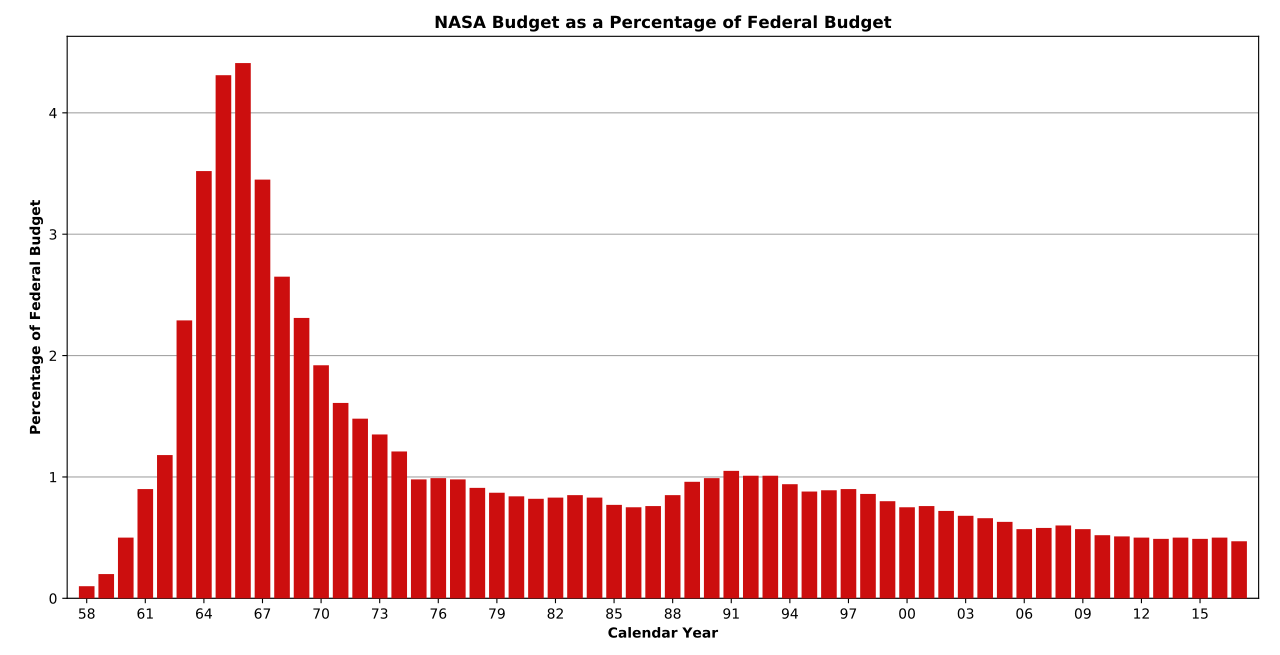
There’s also the issue that after the moon landing we didn’t really improve that much and much of the knowledge faded
They weren’t even that good as a kid if you read anything else
Here’s an excellent analysis of how and why the Harry Potter hype of the late 90s was very intentionally manufactured and sold to kids.
This happens to everyone.
Yeah, they said that in their comment. Did you not read all 5 sentences?
Edit: Sorry, I misunderstood your post.



“All lives are equal but some lives are more equal than others.”