I’m here for awhile
- 100 Posts
- 113 Comments

 1·2 days ago
This case has been brewing for quite awhile. Excited to see the outcome from the Institute for Justice lawsuit.

 2·3 days ago
While possible to use in a mobile environment, connecting via Tor browser on desktop makes it a lot more usable is all I meant. Common keyboard commands are implemented.
Any critique on the actual code, utility of the tool, premise of the idea?





12166594567022175623823597336925
914139 1310415

 4·22 days ago
I made this for me and my family. You self host your own private platform.
First, thanks for replying I appreciate the feedback and thoughtful replys.
If your social media instance has 1000 users on it, and one user gets compromised, then the other 999 users shouldn’t have any interactions outside of that user leaked.
If I intended on using this for mission critical communications or something, maybe I would add and enforce two factor authenticated logins. That could mitigate this conern to some extent. Or use tors built in authenticated onion service mechanism and distribute the certificate to users. This thing was never intended to scale to that size though.
But this is pretty much the case for any platform yeah? If you gain access you gain access?
Users that did not allow their posts to be shared with the compromised account would remain private, and conversations outside of the compromised account would remain private. AND, let’s say you had a hint that a account was compromised and you were using web crypto. Resetting your password would break the encryption of all conversation history… OR anyone engaged in a sensitive conversation could remotely wipe their conversations.
Are file uploads encrypted?
File uploads are encrypted in transit from the client to the server but not encrypted on the server. Anyone needing anything further would already know how to encrypt a file and can handle that manually. It’s a heavy operation is the main reason. My use case is to send a pdf of a already public news article or something so I didn’t feel implementing was important.
But if I may flip the question… Why does an inaccessible post even need to return 403 anyway? It just functions as a big footgun that may cause any other exploits to behave worse.
That’s a fair question. I could see how it could be used to test to probe the server or something. The thing is, you would only get that different 403 response if you were logged in. If you were logged out, you get the same response checking for a valid uuid and a non uuid so I’m not sure what an attacker is learning?
But you can determine its existence or not through the status code.
You get the small benefit of knowing if a file exists only if you have valid credentials. If you don’t have credentials your going to get bounced to the login screen no matter what string you try with no feedback.
Gifs will lose any animation, pngs will lose quality. Also, as far as I can tell, there’s nothing stopping a malicious user uploading a non-image file.
Again this is a design choice I don’t want gifs. There are filetype checks on line 350 of the app. PNG, webp, jpegs allowed only.
One of the main design goals was to keep this light weight. That’s why I’m only displaying 10 photos before a new page is created. I am extremely happy with the performance of the image compression. The compression amount is tunable however if you want higher quality.
The server can ingest a 8mb photo and compress it down to 100-500kb and it still looks totally fine to me. I was most amazed with this function. Plus, I like that I’m able to archive all these family moments into a really small footprint. Over 250 photos is only like 40mb.
There are two steps to making a post: Upload and store the image and add the post to the database. There’s also similar steps to deleting a post: Removing the image upload and removing the post from the database. Are both these operations atomic?
Yes deleting is atomic. It should leave no trace in the db and it really removes it from the file directory of the sever. Also wiped are all related comments and likes associated with the post.
It’s not that hard for a sufficiently motivated adversary to get an account on a sufficiently large instance. You need to ensure that one user account being compromised doesn’t result in information leakage from unrelated accounts.
My current built in security features are as follows.
-
invites only generated by the server manager
-
ability for the server manager to delete and wipe accounts.
-
ability to rotate your onion address. This cuts of all access to the service. The server operator would need to redistribute the onion address.
-
users have control of any data they have sent to the server…ie real deletion rights that really delete things.
-
any new invitee to the server has zero access to any accounts. Each user already in the instance needs to manually allow access to all their posts.
-
This was a great moment to showcase the vulnerability. Reading his own YouTube script in the live footage to prove access is wide open. Unreal!

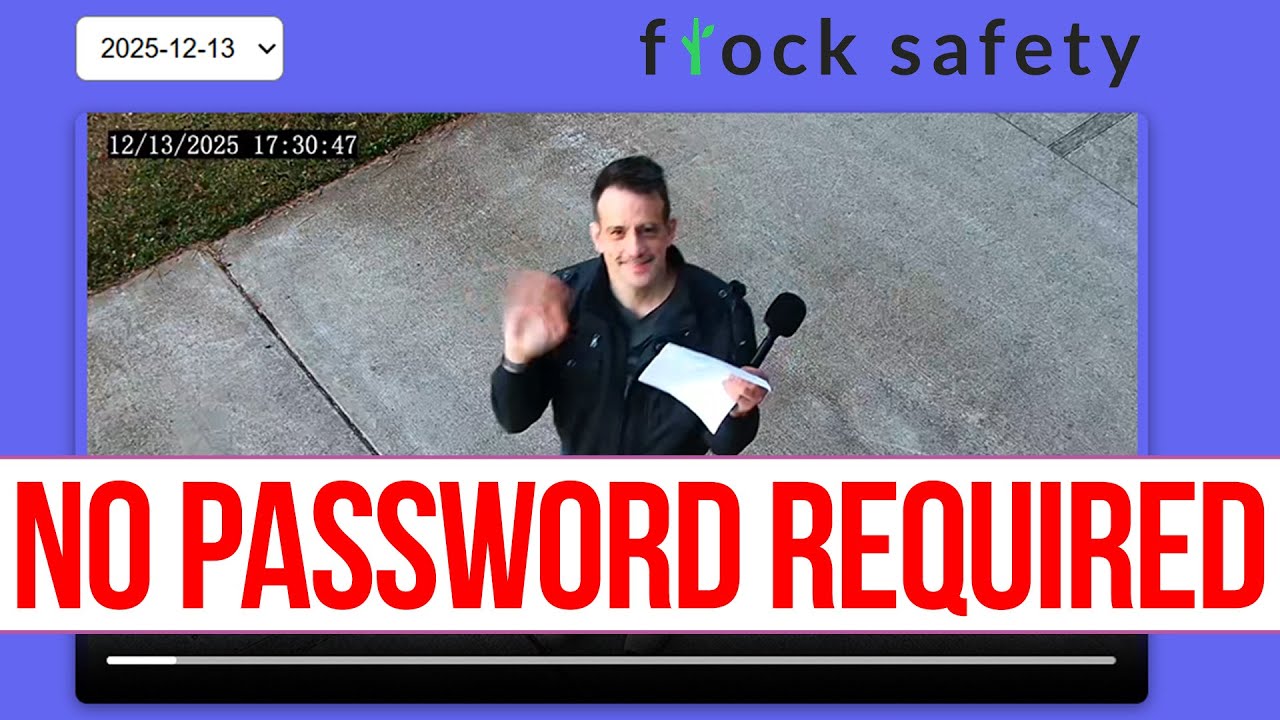

- You list “Activist/journalist secure communication” as a use case. Not all countries have freedom of press.
Is that an inaccurate claim? It should provide the means to organize and communicate securely…to the extent Tor is secure, and if your using the official Tor browser, web crypto can be utilized for group and 1-1s for an additional layer of encryption. I thought it was a fine claim. It should be able to handle quite a few people messaging all at once on the PI varient.
- Looks like you name images based on a random uuid, so that should protect against filename attacks. But if you do have a filename you can tell whether the image has been an image or not.
How would you ever discover a filename?
If you did have a filename and the exact url to the image you would need to be logged in as a valid user, and the person who shared the photo would have needed to allow access to their profile.
Even if you have the correct link, if those two conditions arnt satisfied you will not be able to view.
Also, looks like all uploads are converted to jpg, regardless as to whether the original image was a jpg (or even an image) or not. Don’t do that.
This was a design choice to have consistency in filetypes. What’s the downside? All browsers will support displaying a jpg.
- Can you point to where in code this invariant is enforced?
Which part are you talking about? The image compression is defined as the compress and store function.
The “API reference” in the readme goes into further specifics on how this works with flask.
Everything except the login page, registration link will behind these two checks see (def login) where the @loginrequired logic is defined for each of the app routes.
- I disclaim the opposite, I don’t tout its ability against nation states in the Readme.

- There are two checks for someone on the server to be able to view a post. First, are you a valid user? Then did the person sharing the photo give you access to view their posts? If both are true you can see the post. Also, on upload to the server, the image get compressed and stripped of any meta data including the file name…so no they couldn’t check a file name. Each photo is given a randomly generated filename.
Edit.
- There can’t be any posts without images attached. There will always be a post and an image. (unless it’s a 1-1 DM or group chat) which has its own rules for access.
It was a light hearted plea. I hope people can see past my lack of style and I don’t mean to offend you. I was surprised at all the negativitiy.
Sorry I don’t mean to come off entitled. It’s not a very constructive community though that’s unfortunate haha.
Better? https://gitlab.com/here_forawhile/nanogram-termux
Dedicated expanded pi version coming later.
Ok I’ll work on it and share when I am done

So just a expanded file structure directory is what you want? The script executable expands to each individual piece once run.
What do you mean a actual published source repo? I do not understand how its not that. Everything is packaged into one script.
Here is the source tree.

I made this on mobile, and one monolithic file was how I can quickly iterate and test each feature.
Every time I added a new feature I had to test it’s function to test if it was properly implemented and exactly what I wanted. Keeping it all one file means I could copy paste it into the terminal. Running it overwrites all the home directory instantly with all my updates across the python, db, html, css.






I am a huge fan of both of those alternatives.
This isn’t nearly as powerful or feature rich as either of those alternatives …but… I don’t think ironcalc has realtime collaboration and neither of the two alternatives can be spun up on the fly in a mobile environment. That would be the main differential factor.
Heavy sheets with large amount of logical dataprocessing; this is not a winner in that regard. This is for casual everyday use, simple budgets, light accounting, ect…