

- cross-posted to:
- hardware@lemmy.world
- cross-posted to:
- hardware@lemmy.world
You must log in or # to comment.
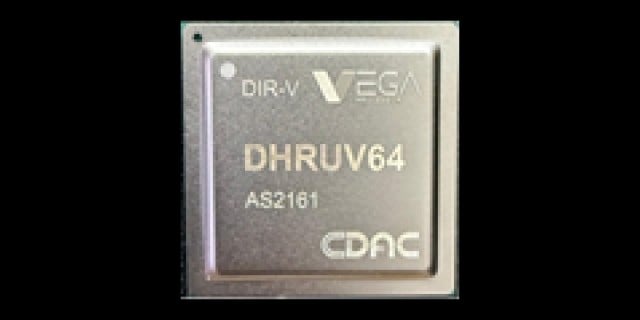
I am hardly suggesting that this chip is competitive but the article is too hard on it.
In particular, this chip inherits the existing RISC-V ecosystem. The article mentions that it runs Linux and it will be well supported by compilers like GCC and Clang. If there is a niche where it fits, this chip could be put to use right away.
There are many, many applications that do not need the most powerful or even the most efficient chips.
Reliability and longevity of supply are often the most important criteria. I notice that the Indian government describes this chip as “reliable”.
At the right price and with a bit of government support, you could build a domestic industry around this thing (or future versions).
Agreed, but then government should provide some sort of guarantee that it will be available at least for another ~10 years. Or do so for the next release.
Great.
Now make RAM :P
Although dual core 1GHz is pretty good for a lot of things and would be a pretty good thing to use in place of many other expensive alternatives, the power requirements feel like the biggest issue here.
Specially in case of IoT, 5G infra and consumer electronics, where the 2 big problems of battery life and thermal dissipation come up.In case of 5G infrastructure, where the components are expected to be used continuously and aren’t replaced for years, the power consumption (and the extra power consumption on cooling) will easily trump any cost savings, Indian companies might get from cheaper components.
But of course, the broadband providers may happily use those chips in the user-side units, where they are not having to pay the user’s electricity bill.Can only be said for sure after the power consumption details are released.
