

1·
5 hours agoAgreed, but then government should provide some sort of guarantee that it will be available at least for another ~10 years. Or do so for the next release.
Rekall is a company that provides memory implants of vacations, where a client can take a memory trip to a certain planet and be whoever they desire.
Agreed, but then government should provide some sort of guarantee that it will be available at least for another ~10 years. Or do so for the next release.

Edit: now he’s considering if he just wants to sell it and go without gaming for a while.
IMO, not worth it unless the RAM is not in use.

Pretty brutal bug even though it was tied to a specific model.
It was, I believe the 5700X3D is also not in production.
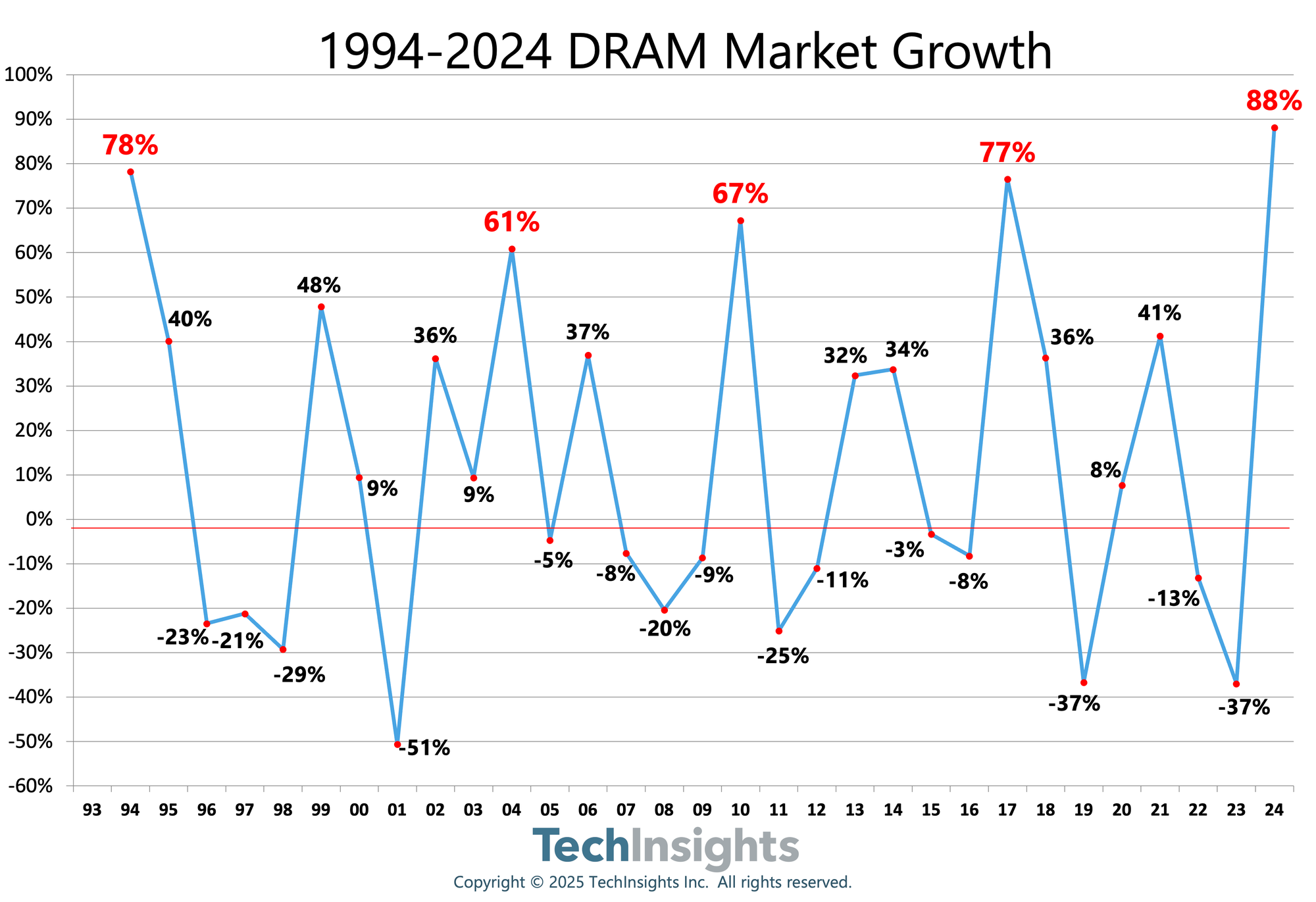
An interesting chart, but difficult to interpret in more depth. The article suggests this refers to price changes not “market growth”, but then what is the unit per price value?
According to TechInsights, memory pricing was already on the rise in 2024, growing 88 percent from a rather steep valley the year prior. Based on previous DRAM booms, one might expect it to grow at a slower pace in 2025, before contracting in 2026 or 2027.
From my perspective, a high end (at the time of purchase) desktop should still be usable in 10 years.
In 2023 I was working on an old laptop from 2014 with 760M and an i7-4702MQ, it was not the best (although I added an SSD and upgraded to 16GB RAM), but it did OK and could play older games just fine.
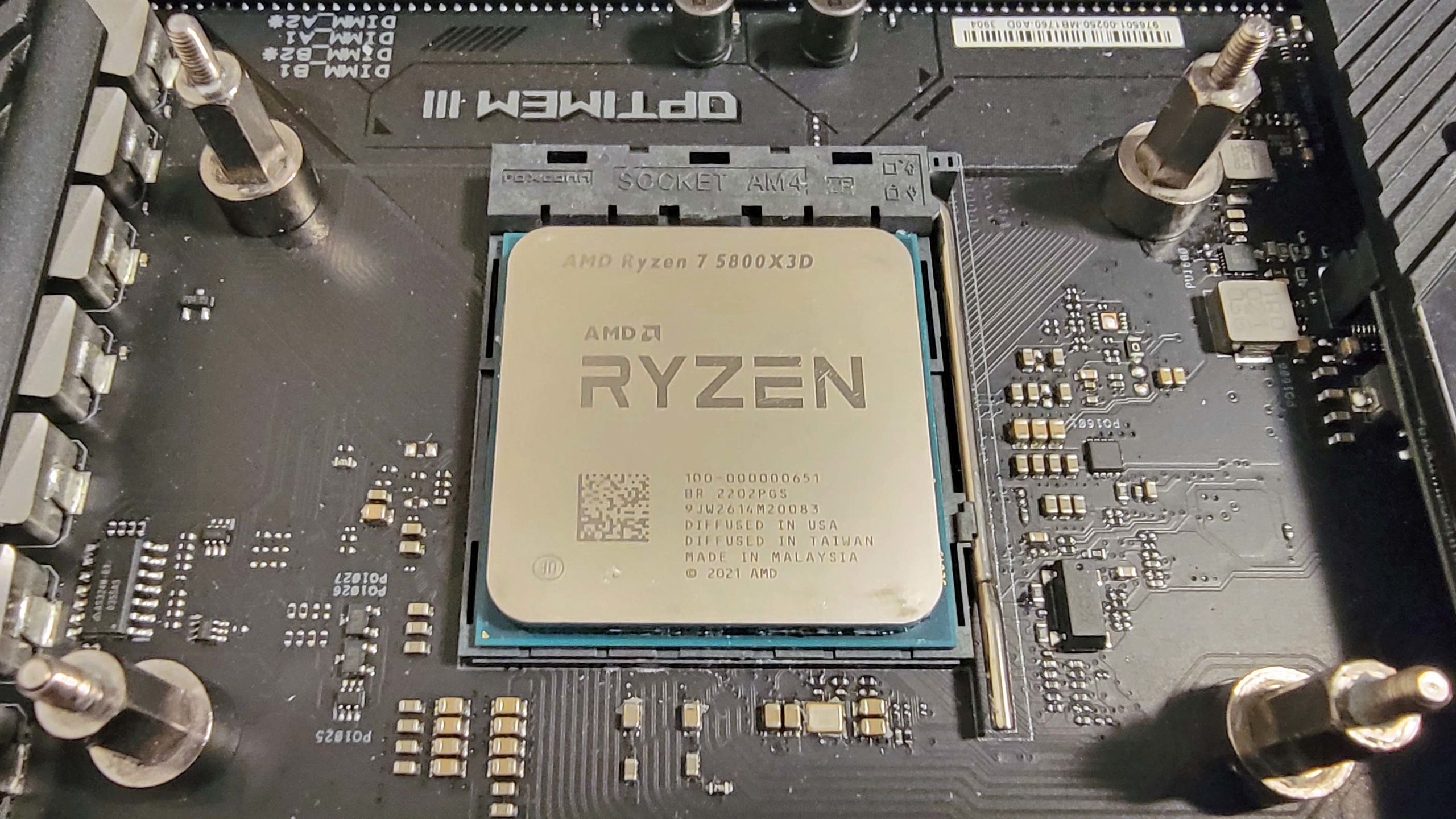
I really wish they did another 5800X3D run (or even a 5800X3D XT). I missed the opportunity to buy it and the grey market prices are stupid.
I have a pretty solid AM4 rig; 3080 GPU (which is enough for my needs), x2 32 GB 16 CL 3600 memory. Tons of storage for HDD, PCIe 4 and PCIe 3 for different use cases, a solid cooling system.
I was planning to upgrade to AM5 next year, but I don’t think it’s happening. To be honest, the only way I am limited is the CPU.

I don’t think Chinese GPU vendors will be any better than Nvidia or AMD. That being said, Chinese GPU companies taking say 25% of the (global, B2C) market will probably force Nvidia and AMD to change their tone.
One thing that is undeniably true is that the Taiwanese cannot trust the Americans. A two generation gap is very reasonable on the part of Taiwan.
Unlike other SMR designs we’ve discussed over the past year, Radiant’s Kaleidos reactors are tiny, capable of producing about a megawatt of power each. However, the actual mechanism for energy generation isn’t too far off from the designs we’ve seen from X-Energy, which use TRISO fuel pellets and helium gas as a coolant.
I am not expert on DC power provision strategy, but one megawatt seems like a tiny amount.
However, the jury is still out on whether SMRs will ever be cost effective. In September, analysts at the Centre for Net Zero (CNZ) estimated it would cost 43 percent less to power a 120 MW data facility with renewables and a small amount of gas-generated energy, compared to using SMRs
Then what’s the point? Even if economies of scale bring down production costs, there are still going to be unique costs with operating SMRs.
Are they planning to deploy them without any safety measures? Literally just a trailer module that any well-connected local goon can deploy anywhere?

Very cool!
You should promote this community on !newcommunities@lemmy.world and !communitypromo@lemmy.ca

I have mixed views on this.
On one hand I agree with you, especially when it comes to dealing with Palantir or really any company that can be influenced by the US, but on the other hand there are legitimate uses for such technologies in the sphere of national security and even public security.
I would argue it’s the citizens’ responsibility to make sure that the usage of such technologies is done in a framework of checks and balances (i.e. in a responsible manner).
I don’t believe in rhetoric about “the state infinitely expands surveillance capabilities”. The state is a reflection of the voters and there is no laws of physics or chemistry that guarantees such expansion via Brownian motion or what have you. If you do have institutions going overboard (be it the state or corporations), the root cause are the citizens (examples like NK or Eritrea notwithstanding).
Incredible that they’re still contracting an American company (one that is known to be controlled by particularly corrupt oligarchs) instead of building out their own capabilities.
In the fall of 2024, the first samples of the equipment were sent to Intel for evaluation. Later, Samsung, TSMC, and other major market players also showed interest in the technology. DNP plans to start mass production of the necessary materials for 1.4nm chips in 2027. However, the established industry, entirely built around photolithography, could slow the adoption of the new technology. Switching to it would require manufacturers to significantly retool their existing production lines.
Sounds like ecosystem/industry inertia will limit the adoption. Perhaps Japan’s Rapidus will try and leverage this tech as sort of high risk / high reward strategy to compete against TSMC.
That being said, throughout the video, Crisler commended PC gamers as a whole for being resilient, having weathered several shortages and emerging victorious on the other end. He advises the community to: “Put your money away. Relax. Play some games. Enjoy the system you’ve got right now.” PC gaming is not going anywhere, and even this crisis will eventually sort itself out.
It feels like prices for components have been elevated for 5-7 years. First GPU crypto mining, then the COVID shortages and now the AI bubble. I am not sure what “emerging victorious” refers to. That being said, PC gaming is not going anywhere, there are so many good games that work fine on even older hardware.

The question is how soon.
The bubble can go on for a long time with circular financing schemes and it has full backing of the US gov.
It’s worth pointing out that lack of RIO has been a thing for a while now.
Is this a Linux distro for strip club employees?

The best you can do is help them install uBlock Origin and FB/Insta Lite (not great options, but better than the mainline apps).
I can’t stand Android WebView apps, especially in retail. The whole point of installing a mobile app is to get a smoother experience than using the mobile webUI.











It’s not going to be well supported unless the Nvidia and AMD are required to make their pre-2020 driver code public domain. Which is not going to happen.