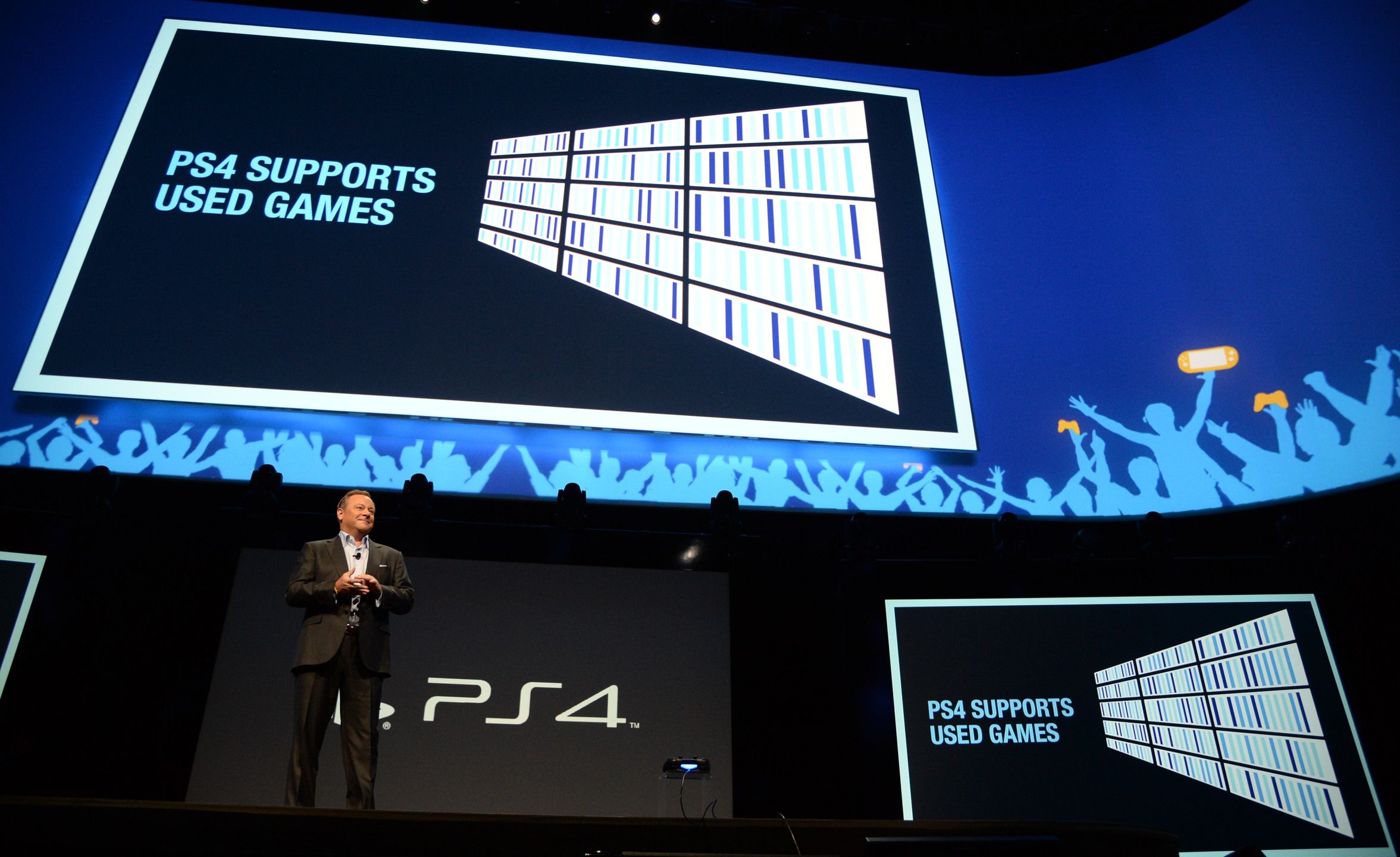
The detailed sourcing directly attacks Sony’s legal claim that a reasonable person wouldn’t expect to own their digital purchases on the PlayStation Store.
Just can’t win. They want to extract as much as humanity possible from every human. Like wtf, who cares, we just want to play games we spent money on and not risk you sneaking in and stealing them from our accounts. It’s not hard at all to be a decent fucking person. I hate large companies with such passion, I’ll NEVER stop sharing your pirated bullshit. Fuck you sony and all the others like this.
You can’t spell class action without ass. Or something to that effect, anyway, fuck Sony.
“Do we really “own” anything? How absurd. Memento mori, dust in the wind.”
The jury applauds, Sony wins
I had a PS4, with a couple of digital games, then I sold it and I didn’t have ps for a few years, recently I got a PS5 and my account didn’t exist.
Seems like Sony remove your account and your games if you don’t login in 3 years…
This feels like owning a yogurt.
Pretty sure that’s mandated by GDPR
GDPR says that data should only be kept as long as necessary for the fulfillment of what the user requested or consented to. So, I would say automatic account deletion after inactivity is a good idea for complying with the GDPR.
But you would typically implement that by sending out an e-mail before the deletion, to give the user a chance to keep their data. The GDPR does not block you from implementing that.
These services generally do warn you months in advance. Though I cannot say from experience, I think it most unlikely sony sent nothing to the user.
GDPR mandates that your data must be deleted if you demand it. GDPR does absolutely not mandate that your data must be deleted against your will.
What you may be thinking of is a clause regarding free accounts, so a digital tracker can’t remember you forever just because you never specifically requested being deleted; if the account holds some form of monetized ownership, then I don’t think the same rules apply.
Absolutely sure that is not covered by GDPR.
You have right to be forgotten - that means if you want, you can request data deletion and it has to be granted.
Another part says the service can store the data only for as long as necessary, not that it has an expiration date.
Absolutely not, the GDPR says that you have right to delete your data when you want and in a easy way and that your data may be kept as long as necessary, so what sony did was not to abid to the GDPR
Oh shit, its rossman’s consumer rights wiki! Cool to see ☺️
If they meet in any reasonable court, Sony is fucked.
Capitalism
Would be the same under any system. The admin is corrupt
“Sigh, ok, you win… AGAIN… How much is that? 0.5% of our quarterly profit? Sure, man, whatever. Here. Buy yourself something nice.”
So Sony isn’t fucked then.
Too big to fail.
Well, any person who has made a PSN account in the past 15 years is bound by arbitration. An arbiter that Sony pays. An arbiter that will not get paid again if they rule against Sony.
So… probably not reasonable.
Glad I never made a PSN account. Glad I stayed the fuck away from Helldivers 2 until they removed the stupid PSN requirement.
Forced arbitration provisions have been thrown out before. So have contract clauses that ban class actions.
A company can put whatever they want in their agreements, whether it is enforceable is a completely different story, and things are tossed out by courts all the time.
They’ll settle
“How much is that? Oh ok, that’s what I tip my limo driver. Here you go.”
I should drive a limo
It’s kind of funny how everyone is up in arms about this now (and for good reasons), when like, that’s how copyright has always worked? You don’t own anything that’s copyrighted, except for what you yourself create and get a copy-monopoly on.
When I buy a copy of something I don’t expect to own the intellectual property and all of the themes and elements that make up the intellectual property. I expect to own that one copy that I bought. Just the copy. The medium.
That take is nuts. Are you telling me you’ve never bought anything in your life? That’s the only way I can imagine that you could be so far off base.
It’s not a take, dude. It’s literally just what the law is.
It is not lol. You do not understand the laws you are trying to quote.
Your so wrong is impressive.
Every book on my bookshelf is copyrighted, but I own those books, OWN. I can resell them, legally, regardless of copyright. There are used bookstores that base their business around buying said copyrighted material and reselling them (Again, perfectly legal). I can’t say the same thing about my steam library, but I should be able to.
Copyright is about ip, not about the physical media, the end products.
It’s literally right there in the name - copyright
Bruh copyright is about the right to make copies… completely different thing… its in the name cmon man
No, this has never been how copyright works, if you buy a book you own that copy of the book, the author can’t go into your house and take the book back, they can’t force a new version of the book onto you, they can’t require you to proof you own the book before they allow you to read it, and they can’t stop you from reselling the book. You OWN that copy, you don’t own the IP, but you own that copy of the book.
You own the physical thing, but you’re still only licensing the copy of the work, and agreeing to that license on purchase. Lookup the first sale doctrine. Your ability to resell used copyrighted works literally hinges on a supreme court decision.
What I’m trying to get at is, this should not only aggravate us towards Sony. It should radicalize you against Copyright.
You completely misunderstand the first sale doctrine. The doctrine is that copyrighted works are only controllable on the first sale. The copyright holder can’t do anything past that.
The entirety of sales of things for all of humanity wouldn’t function if it was any other way.
You aren’t licensing anything. You are buying an item.
Please show me where it says that purchasing a copyrighted work grants ownership of it.
The first-sale doctrine (also sometimes referred to as the “right of first sale” or the “first sale rule”) is a legal concept that limits the rights of an intellectual property owner to control resale of products embodying its intellectual property.
https://en.wikipedia.org/wiki/First-sale_doctrine
The first sale doctrine literally has NOTHING TO DO with ownership. It has to do with resale restrictions of the copyright holder. You have completely misunderstood the law and its purpose.
Here, since you avoided my question, I’ll just spell it out for you.
What You Actually Bought: A License
In most transactions, you buy a license, not the copyright. A license is formal permission to use the work under specific conditions. It defines where, how, and for how long you can use the content.
Many people assume payment equals ownership because that logic applies to physical goods. But copyright law works differently. Under U.S. law, copyright ownership automatically belongs to the original creator, regardless of who paid for the project.
Sorry, but you do NOT own any of the copyrighted works that have ever been given to you or purchased. They are all licensed with limited usage rights. I pointed out the first sale doctrine to highlight it as a very narrow exception to the norm of licensing. That exception was born of the necessity to balance the reasonable needs of individuals (and of course the used market as a whole), with the purported needs of media rightsholders. Even if that supreme court decision (which was later codified into law) grants one additional right for a person to make a resale of the finite copies of physical goods they purchased legally, even then you still do not own that product, because a plethora of other restrictions still apply.
Copyright law is in need of serious reform. Pretending it is whatever you want it to be doesn’t magically put it on your side. That’s exactly why scammy companies like Microsoft, Nintendo, EA, and Sony can keep getting away with all their bullshit - the law tends to be on their side whether you like it or not, cause guess who it was written for.
The very concept of purchasing? The very base of all contract law?
With people like this who needs to even work keeping people down? Do they put a boot on their own neck every night?
It won’t radicalize me against copyright because I believe people are entitled to profit from their creations, and until we live in a society beyond the need of money corporations would fuck everyone in the ass (even more so than what they do now) if there were no copyright laws. Or do you any of the mega corporations in Hollywood would give a cent in the direction of a good story of they weren’t legally required to?
In any case, that is different from what Sony is doing now. Like I said before:
- the author can’t go into your house and take the book back
- they can’t force a new version of the book onto you
- they can’t require you to proof you own the book before they allow you to read it
- they can’t stop you from reselling the book.
Those are not covered by copyright law, you have a right to do that with your books but not with your Sony games.
This steamed from the way digital downloads came about, and we agreed to trade some rights for ease of access, but companies like GoG show that it’s possible to have digital downloads while preserving some of those rights.
It won’t radicalize me against copyright because I believe people are entitled to profit from their creations
One, in a capitalist society, the only thing that entitles you to profit from your work is the completion of a sale. I can draw a crude picture of a turd right now, and despite suddenly becoming an artist, I am not automatically entitled to profit. Two, copyright does not help artists profit. It allows the biggest corporations to consolidate media ownership in their names. By contrast, the internet, which has allowed the free sharing of media on a scale that completely eclipses any other time in history, has allowed more artists than ever to profit from their work. If you care about artists making a living, then you should support information freedom. If you prefer concentrating wealth and media control into one small racket, then yeah I guess copyright is your thing.
You can’t have your cake and eat it too. Either you want to reform the legal framework into something equitable, or you can keep bitching about the excesses of the evil corporations for doing the same bullshit they’ve always been doing, while still wanting the same laws that make them what they are to begin with.
And meanwhile, you’re having this argument on a free and open-source platform… why?
You don’t own the IP rights to the work but you can own a copy of it to do as you wish with. Unless of course you are merely renting a copy or purchasing a license to use that copy temporarily. That’s the difference being discussed here, nobody in their right mind thinks buying super mario 64 means you own mario the concept.
Like, you are kinda right in one way, but there’s a difference between owning the intellectual property vs owning a thing.
It should be understood by most people that they are not buying the IP. They do, however, expect to own the product they paid for.
The company is trying to equate owning the IP to owning every copy of the product they sell with the right to revoke your access to the thing you bought and not have to give you your money back. That is their argument. This is some bullshit, and everyone knows it.
I appreciate that you took what I said in good faith. I don’t know if I’m just failing to properly convey - I understand that when, say, you purchase a physical book, you own that thing. That’s because it is a thing, your one copy, a finite object. You do have limited rights to resell it too.
But what I’m trying to get at is, within copyright law as it exists now (and pretty much ever so far), even though you own that physical object itself, because it is bound with a copyrighted work, in a sense you actually do not even own that book. it’s because when you purchase a copyrighted work, what you have done in the eyes of the law is that you have purchased a limited use license. Your rights with that book are still restricted by that copyright.
I’m not trying to say that’s how things should be. I just think it matters to understand how things really are, if we’re inclined to want to change them for the better. Courts are not going to be able to go far enough to create the kinds of reforms that are wanted in the Stop Killing Games movement. It’s going to need new legislations.
Yes, but the restriction on that ownership is the ability to reproduce and sell it. People want the same freedom to keep their copy of it, without access to it because it’s a digital media that only exists in an ethereal form as data on a server, being taken away. We want our copy to actually be ours, physical or not.
I agree it needs new legislation to rephrase all the legalese that confuses the definition of “ownership,” so there is a clear legal distinction between the ownership of the IP and the ownership of a consumer’s purchase of a copy of some media.
Do you have any proof for that?
Understandable. Have a nice day.
Omggg hahaha. Sorry this was a reaction image. I dont know why it didn’t turn up
Did you forget to type something?
I don’t think they actually owned the letters they typed.
Sony must’ve revoked their license