

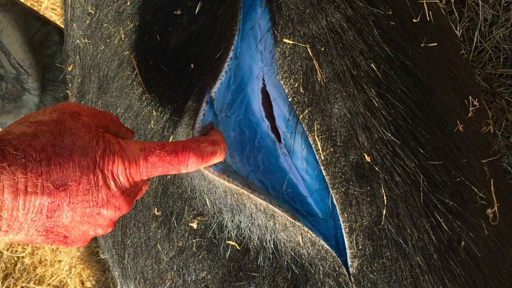
“Hunters should be aware that the meat of game animals, such as wild pig, deer, bear, and geese, might be contaminated if that game animal has been exposed to rodenticides,” says pesticide investigations coordinator Ryan Bourbour from the California Department of Fish and Wildlife (CDFW).
“Rodenticide exposure can be a concern for non-target wildlife in areas where applications occur in close proximity to wildlife habitat.”
Concerningly, this isn’t the first time wild pigs in the region have had their innards tainted blue.
Surely that would be more of an argon or mercury blue. Neon is, what, orange?
It’s the difference between classic rock, the genre, and classic rock, which is rock from your childhood/teens. Neon is much more of a class of colors (well, hues or values is probably more accurate) in the modern parlance than an actual color itself.
Fun abridged history: Neon colours are named for the lamps because neon was the first gas used in them. The OG glass tubes filled with the gas became the brand name and a lot of the other colours still use Neon, just with different coatings on the glass. Cooler colours use Argon. Neon colours are also called fluorescents, a term named for fluorite, which is a completely different mineral that glows under UV light. Neon pigments contain neither neon gas or fluorite.
Neon is also used to describe bright colors; in this case, bright blue.
Only if the pig is in an electric field.
deleted by creator