Basically, right now an identity (or account) is tied to a server. If the identity was tied to a cryptographic key instead, it and all of its content can be migrated to another server through an automated process. Both servers would have to authenticate the process with a public handshake, but essentially you would be able to move your account to another server - or even tie several accounts together into one identity.
Normally, your Fediverse identity is tied to an account. It is an account. And that account is tied to a server. Thus, your Fediverse identity is tied to a specific server.
Now imagine your Fediverse identity is not tied to a server. It can exist simultaneously on multiple independent servers. And I don’t mean a Lemmy instance on a Beowulf cluster. I mean two, three, four or more Lemmy instances.
mindequalsblown.gif
Also, I don’t mean dumb copies that exist after you’ve moved someplace else. I mean clones. Live, hot, bidirectional, near-real-time, bidirectional backups. And they’re still all the same identity with all the same content, always.
mindequalsblown.gif
Okay, so you’re on lemmy.dbzer0.com. Let’s assume you also have a clone on lemmy.foo.social and one on lemmy.bar.social.
A hypothetical nomadic Lemmy will see them all as one identity. One account, basically, only that it isn’t one account because you can’t have one set of login credentials across three fully separate servers. The logins are separate, they are individual, but everything else is kept in sync between the instances.
mindequalsblown.gif
So, what exactly happens when your identity is nomadic?
You send a new post. This post, as part of your identity, is automatically sync’d over to lemmy.foo.social and lemmy.bar.social.
You join a new community. This community membership, as part of your identity, is automatically sync’d over to lemmy.foo.social and lemmy.bar.social. Still, that community will only list one you and not three of them.
You change some settings on lemmy.dbzer0.com. These changes are automatically sync’d over to lemmy.foo.social and lemmy.bar.social.
mindequalsblown.gif
Okay, wait, now comes the real kicker. The reason why all this exists.
But fret not, you can still carry on! For you can log into either of your clones and use them just like the original!
mindequalsblown.gif
So instead of logging into your account on lemmy.dbzer0.com, you log into your account on lemmy.foo.social. And you can use it just like the original with all the same communities and all the same settings and whatnot. It’s all there.
You log into one of your clones. Then you make that clone your new main instance, your new original.
Your identity becomes nylo@lemmy.foo.social. The identity of your clone on lemmy.bar.social becomes nylo@lemmy.foo.social. All your posts and comments are re-attributed to the new name of your identity. All communities that you’re a member of switch to listing you as a member with the new name of your identity.
kermitflailing.gif
Sounds revolutionary. New? No.
This was thought up by the Friendica inventor Mike Macgirvin as early as 2011. He actually wrote a whole protocol around it: Zot. And he first implemented it on a fork of a Friendica fork named Red (later Red Matrix, now known as Hubzilla) in 2012. Almost four years before Mastodon. Five years before ActivityPub.
whatthevgcatsatomicfbomb.jpg
Almost everything that he made after Hubzilla, including both Hubzilla descendants that still exist today ((streams) from 2021, Forte from 2024), are fully nomadic. (streams) uses a protocol named Nomad, essentially a much newer version of Zot, but incompatible to Hubzilla’s Zot6, so it got a new name. Forte uses nothing but ActivityPub for just about the same level of nomadicity.
By the way, nomadic identity can also used to move an uncloned, single-instance identity from one server to another. In fact, this is a subset of nomadic identity (as opposed to its basic operation as you may assume) that’s based on cloning. It involves creating a clone, making the clone your new main, demoting your old main to clone, then deleting your old-main-now-gone-clone in order to not leave any dead stuff behind.

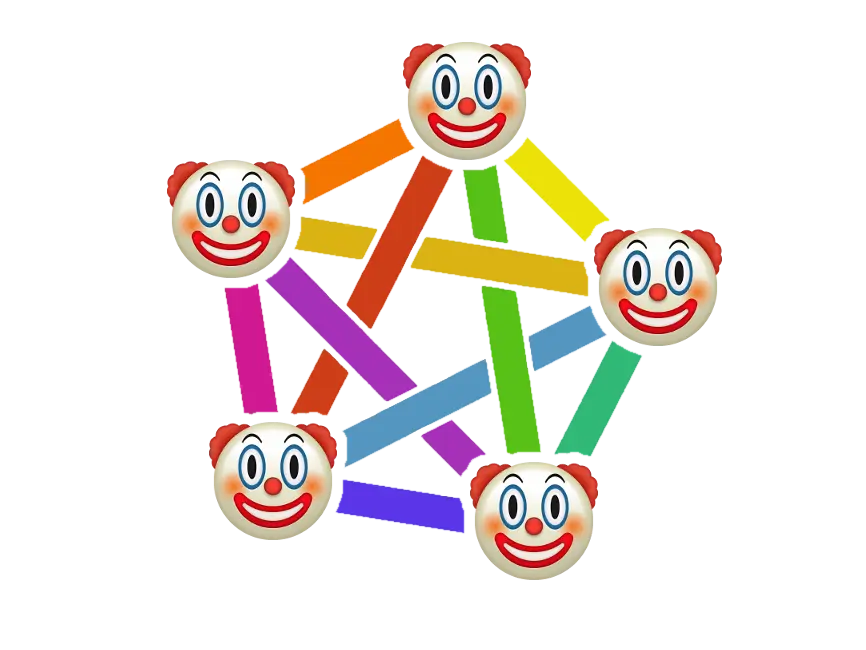

can you give me an ELI5 of what nomadic identity does? I gave a glance at that page and just wound up with more questions lol
Basically, right now an identity (or account) is tied to a server. If the identity was tied to a cryptographic key instead, it and all of its content can be migrated to another server through an automated process. Both servers would have to authenticate the process with a public handshake, but essentially you would be able to move your account to another server - or even tie several accounts together into one identity.
Normally, your Fediverse identity is tied to an account. It is an account. And that account is tied to a server. Thus, your Fediverse identity is tied to a specific server.
Now imagine your Fediverse identity is not tied to a server. It can exist simultaneously on multiple independent servers. And I don’t mean a Lemmy instance on a Beowulf cluster. I mean two, three, four or more Lemmy instances.
mindequalsblown.gif
Also, I don’t mean dumb copies that exist after you’ve moved someplace else. I mean clones. Live, hot, bidirectional, near-real-time, bidirectional backups. And they’re still all the same identity with all the same content, always.
mindequalsblown.gif
Okay, so you’re on lemmy.dbzer0.com. Let’s assume you also have a clone on lemmy.foo.social and one on lemmy.bar.social.
The identity of your original on lemmy.dbzer0.com is nylo@lemmy.dbzer0.com.
The identity of your clone on lemmy.foo.social is nylo@lemmy.dbzer0.com.
The identity of your clone on lemmy.bar.social is nylo@lemmy.dbzer0.com.
A hypothetical nomadic Lemmy will see them all as one identity. One account, basically, only that it isn’t one account because you can’t have one set of login credentials across three fully separate servers. The logins are separate, they are individual, but everything else is kept in sync between the instances.
mindequalsblown.gif
So, what exactly happens when your identity is nomadic?
You send a new post. This post, as part of your identity, is automatically sync’d over to lemmy.foo.social and lemmy.bar.social.
You join a new community. This community membership, as part of your identity, is automatically sync’d over to lemmy.foo.social and lemmy.bar.social. Still, that community will only list one you and not three of them.
You change some settings on lemmy.dbzer0.com. These changes are automatically sync’d over to lemmy.foo.social and lemmy.bar.social.
mindequalsblown.gif
Okay, wait, now comes the real kicker. The reason why all this exists.
So lemmy.dbzer0.com goes offline for whichever reason.
But fret not, you can still carry on! For you can log into either of your clones and use them just like the original!
mindequalsblown.gif
So instead of logging into your account on lemmy.dbzer0.com, you log into your account on lemmy.foo.social. And you can use it just like the original with all the same communities and all the same settings and whatnot. It’s all there.
Whatever you do is attributed to nylo@lemmy.dbzer0.com. Even though lemmy.dbzer0.com is offline. Even though you do it on lemmy.foo.social.
mindequalsblown.gif
Also, whatever you do on lemmy.foo.social is automatically sync’d over to lemmy.bar.social.
Now, wait for it: lemmy.dbzer0.com comes back online. And everything you’ve done on lemmy.foo.social while lemmy.dbzer0.com was offline is sync’d back to lemmy.dbzer0.com.
yourheadasplode.gif
But what if lemmy.dbzer0.com shuts down for good? When it doesn’t come back? How can your identity stay nylo@lemmy.dbzer0.com then?
It doesn’t have to.
You log into one of your clones. Then you make that clone your new main instance, your new original.
Your identity becomes nylo@lemmy.foo.social. The identity of your clone on lemmy.bar.social becomes nylo@lemmy.foo.social. All your posts and comments are re-attributed to the new name of your identity. All communities that you’re a member of switch to listing you as a member with the new name of your identity.
kermitflailing.gif
Sounds revolutionary. New? No.
This was thought up by the Friendica inventor Mike Macgirvin as early as 2011. He actually wrote a whole protocol around it: Zot. And he first implemented it on a fork of a Friendica fork named Red (later Red Matrix, now known as Hubzilla) in 2012. Almost four years before Mastodon. Five years before ActivityPub.
whatthevgcatsatomicfbomb.jpg
Almost everything that he made after Hubzilla, including both Hubzilla descendants that still exist today ((streams) from 2021, Forte from 2024), are fully nomadic. (streams) uses a protocol named Nomad, essentially a much newer version of Zot, but incompatible to Hubzilla’s Zot6, so it got a new name. Forte uses nothing but ActivityPub for just about the same level of nomadicity.
By the way, nomadic identity can also used to move an uncloned, single-instance identity from one server to another. In fact, this is a subset of nomadic identity (as opposed to its basic operation as you may assume) that’s based on cloning. It involves creating a clone, making the clone your new main, demoting your old main to clone, then deleting your old-main-now-gone-clone in order to not leave any dead stuff behind.