
Trump, you leftist eco-terrorist

Forecast may be wrong, in not counting explosions, and may miss some military use.
Do explosions contribute emissions?
If it’s oil fields and oil wells and oil pipelines burning, the ongoing burning is actually less than the amount of burning that would’ve happened after refining and distribution into tanks to be burned for energy. It’s burned at the end of the path whether that’s in a pipeline explosion or in the combustion chamber of a Ford F-150 engine.
If you’re talking about military munitions, does that compare to the millions of barrels of oil that have been taken offline?
bombs hitting a house do create emissions from bomb and any burning matter. Oil on fire, absolutely creates emissions comparable to their refined products, and also needs replacement oil to meet original demand for products. Investments in new oil drilling or refineries to meet any current scarcity will also be sucked up until they are dry, or keep producing even if most of the world prefers clean energy. Their production/transportation is some emissions too.
OP is calculating end user consumption for fuels. I’m not sure OP gave an exact number, but they are saying you will drive F150 3-5% less on average.
What I’m saying is that the sheer quantity of combustible hydrocarbons burned after normal production is so much more than what is burned from a damaged well/pipeline.
Imagine a pipeline transports 1 million barrels of oil per day, but an explosion damages it so that 100,000 barrels are burned uncontrolled, but the pipeline is shut down for 10 days. Does burning that 100,000 cause more emissions than is saved by slowing down 10 million barrels of production from the wells that have nowhere to put the oil?
Aggregated across the entire oil market, the price signals and shortages start killing demand, too, so that the world as a whole burns less oil. So if even if the war causes 100 million barrels worth of emissions, if it slows down consumption by 1 million barrels per day for a year, isn’t that a net negative in emissions?
(I know that uncontrolled burning causes lots of other pollution that wouldn’t have otherwise been created, but if we’re talking about just the CO2 it seems that war causing supply disruptions would be a net negative effect to global emissions)
100,000 barrels are burned uncontrolled, but the pipeline is shut down for 10 days. Does burning that 100,000 cause more emissions than is saved by slowing down 10 million barrels of production from the wells that have nowhere to put the oil?
Most of that 10m barrels of consumption will find a way to have it produced somewhere. So emissions is in addition to the fire+repairs. Price disruption due to event will encourage more drilling, and once something is drilled with support infrastructure, it is easily profitable to keep sucking instead of stop sucking, even if fewer use oil
Most of that 10m barrels of consumption will find a way to have it produced somewhere.
Even if 9.8 million barrels get replaced, that’s still a net negative.
And look at what we’ve actually seen in this war. Consumption actually is down, and the IEA is forecasting the total demand for 2026 will be 2.5 million barrels per day lower than 2025. Sellers are filling the gap with stockpiles, because supply is currently down about 5.7 million barrels per day, and demand may further be destroyed if oil reserves are depleted and prices/supply shortages get even crazier.
Basically, the rest of the world combined cannot make up for the disruption in the Middle East and Russia.
Everything I’m seeing is that global CO2 emissions will go down, because even 100 burning oil wells and 10,000 bombs won’t generate the same CO2 as the 700 million barrel reduction in oil consumed this year.
Great news. We need a “ratchet law” that only allows the price of fossil fuels to go up, never down.
If the crude price goes down, excess profits go to subsidize research and infrastructure to replace fossil fuels.
Global fossil-fuel emissions are set to fall by in 2026
Time for a Nobel prize, I guess.
Who should get it?
Defo the Hutties
Surprised that more countries are not just doing a global push for more or total EV vehicles and banning ICE vehicles because of the fallout of the fuckhead who went to war, not war, with Iran.
edit I’m not just talking about EV vehicles but more adoption of solar panels, wind mills, geothermal power plant, etc.
Ethiopia did it.
But grid tied EV busses make more sense than EV cars.
Ethiopia is special in that they have immense hydro power capacity, and are building more. For them, energy independence means electrified transport, rather than powering transportation from imported fossil fuels.
Okay I’m sorry to be that guy, but wind mills are used to grind stuff, like grains into flour. You mean wind turbines/generators.
no no, we grind the grains then we burn it for energy
I think I’m burning about 2500 calories per day of grain and similar substances.
You need the appropriate grid overhaul I would imagine to be able to sustain a sudden spike in EV adoption.
That electricity has to come from somewhere and that somewhere usually means fossil fuels or coal that’s transported on similar tankers that are also caught in the metaphorical and literal crossfire.
Solar adoption is already at an all-time high and accelerating, but that’s not equally available everywhere.
I’m no expert in any of this stuff, it’s just how I understand it from an armchair perspective. Feel free to chime in.
Eh, EVs make sense to charge when parked at home or work, where you can have solar panels within 1 km (so very little loss over distance).
What percent of the country’s roofs are covered with solar panels? 5%?
The solution is pretty easy. Solar panels are stupid cheap these days.
OTOH, even coal powered electricity is significantly less polluting than ICE cars, both in terms of co2 and in terms of not spewing particulates out in people’s faces.
That’s always how it is though? Can’t have EVs because not enough electricity, won’t build green electricity because not enough EVs.
The EVs are there for anyone to buy at this point, though plug-in hybrids are currently the best option.
You can do short commutes on battery power alone and you have an IC engine ready when needed.
Also if we force all EV manufacturers to adopt a standard for homes to be able to use their cars as back-up power, or generally for the grid to be able to utilize plugged-in EVs with over 80% capacity to feed back into the grid when required, that could solve most of the problems but it soulds like a nightmare to implement from an engineering standpoint.
Edit: this post describes the benefits and challenges.
though plug-in hybrids are currently the best option.
no, they are the worst of both worlds, a smaller battery lugging around an ICE drivetrain, an ICE drivetrain lugging around a heavy battery, and double the complications.
Most people don’t plug their PHEV and fuel usage becomes horrendous
Fuck PHEVs
Plug-in hybrids use three times more fuel than manufacturers claim, analysis finds
Best option by what metric? Plugin hybrids come with a unique set of issues that neither EV nor pure ICE have. Exactly because you’ll do all your short commutes on battery.
Exhausts literally rust through because they don’t get used enough to clear out all the condensation that develops. Flooring it when you need to accelerate suddenly will cause a cold ICE to come on and take a heavy load without the oil being warmed up, etc.
I’m considering a few too, but I’m not exactly going to pretend they don’t have whole new issues.
I dunno. Straight up hybrids are superior to ice vehicles, but plug in hybrids seem super niche.
I rented a jeep 4xe and the battery only mode would only go about 10-20 miles - I’m not super far from work, but it’s still double that range. And the default software mode was to consume all the battery then only recharge like a normal hybrid (e.g. keeping the battery at basically empty).
Plus the mileage wasn’t much better because it was lugging around the battery pack.
Even with transmission losses and even if you powered them solely with fossil fuels, aren’t the electric drivetrains and power plants still so much more efficient that you still reduce fossil fuel use by burning it at a power plant instead of ICE motor?
the only place where you can get green tech that’s both scalable and affordable like this is china and the entire global north and its periphery is united in preventing this green tech from getting into our hands to various levels.
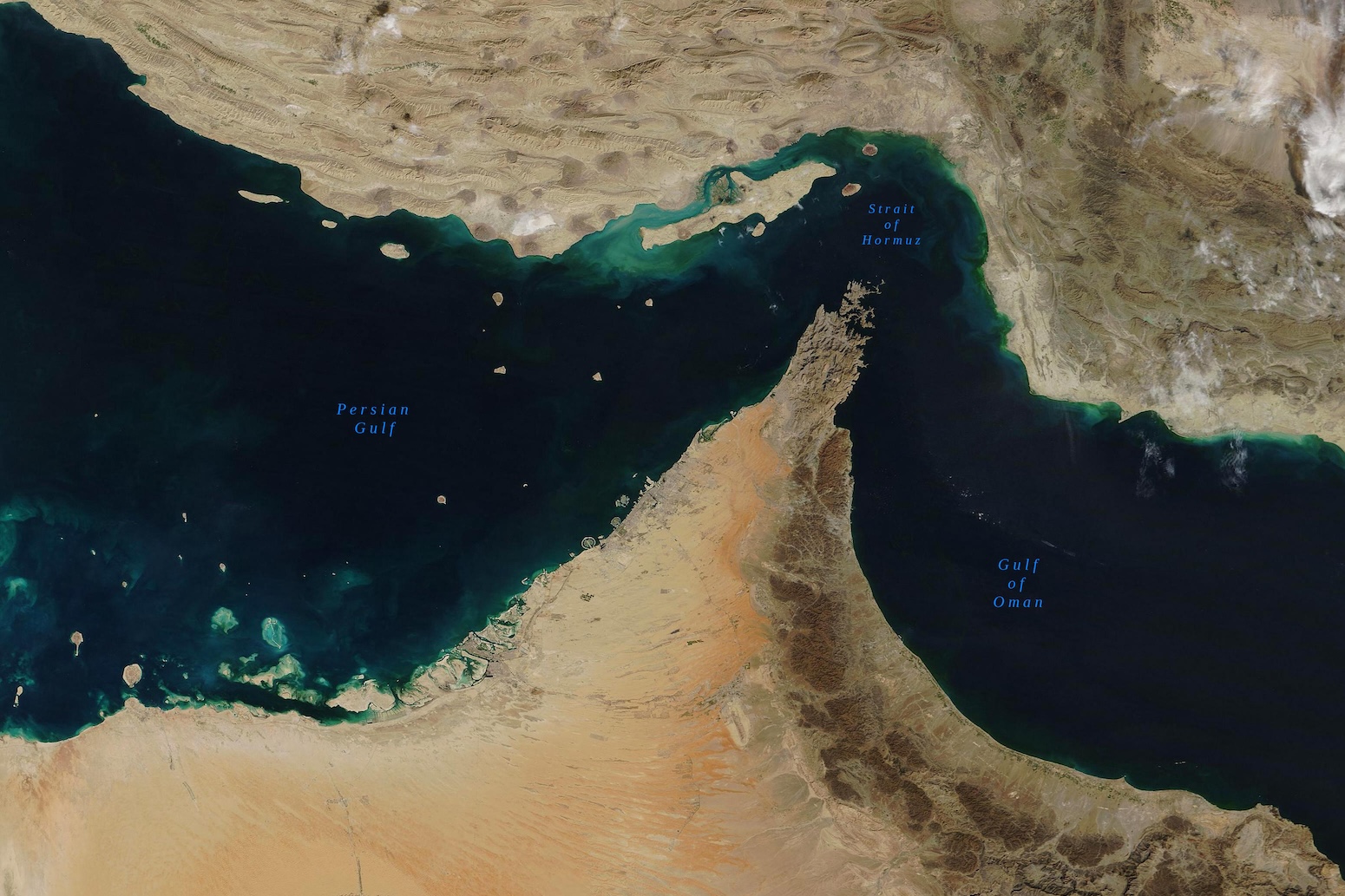
With all the oil burning from both the Iran war and Russian invasion, I doubt that optimism, but it just a gut feeling seeing these videos of huge flames and smokes. I hope they are right 🤞
Most of that oil would’ve burned anyway, just a little bit at a time, inside a combustion chamber, after being refined and distributed somewhere.
When an oil pipeline or well catches fire, it burns in a spectacularly dirty way, but the net CO2 emissions in the atmosphere is actually reduced from shutting down that facility so that it can’t process and export as much oil anymore. Meanwhile, the logistics and pricing effects probably destroy demand, so that the world as a whole burns less oil afterward.
Its working!
How about coal? Maybe bankrupting all bucket manufacturers?
These are real results from crazy crazy people in power.
Historian: donald trump made the EU arm up, the green transition go up, removed dependency of oil and gas, …
Ghost of donald: so people remember me for doing good?
Historian: what a shit head he was, if only he knew how we despise him. If we even remember him.
Would be similar to how no one thinks of Nixon as the EPA/clear air & water guy or the war on cancer guy.
Hopefully it will be his wasting legacy.
Well, yeah. Who knew it would be American imperialism that turns the tide on fossil fuels?
In all seriousness, everyone has known that this is necessary for this system to continue, so it was inevitable that there’d be a shift. They’re squeezing it while they can.
I imagine analysts have identified that building an economy that is dependent on a resource like oil or gas comes with drawbacks and that the oil and gas lobby has access to the worlds militaries which may be used to mitigate those drawbacks.