You might be thinking about IPD (Inter Pupillary Distance) adjustment. You’ll still need a separate pair of lenses if you’re near or far-sighted unfortunately
I have a Quest 2, and I bought a headrest that allows for (smaller) glasses to be worn underneath. My glasses were too large (and the world looked weird when I looked to the side), so I ended up purchasing prescription lenses that attached directly to the headset.
VR headsets, 3D TVs, and 3D movies all have the same issue as far as strain is concerned.
Our brains expect our eyes to focus on what they’re pointing at. If your eyes are pointing at something nearby, we focus near. If we’re pointing at something far away, we focus far.
All the various 3D solutions have a fixed distance and fake the 3D by having each eye get a slightly different angle on the image. The mismatch between where our eyes are pointing and where they are focused can cause problems.
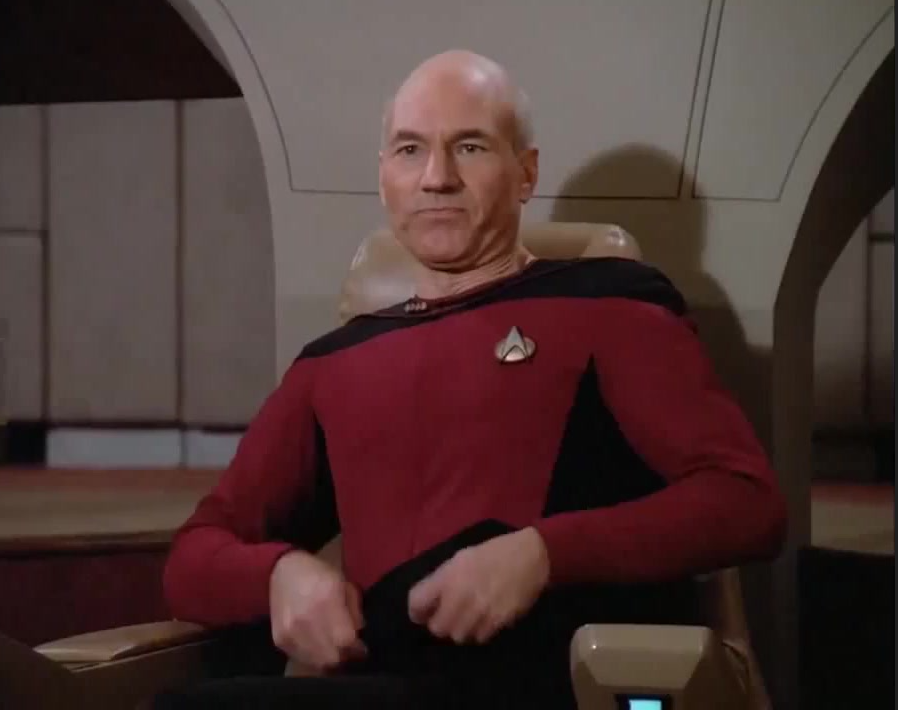
Until 3D reaches the level of a Star Trek Holodeck, it’s going to cause trouble. Ok for a short time, but you wouldn’t want to spend all day doing it.
(this is all me paraphrasing what my eye doctor wife told me, so don’t expect me to know any more about it)
As a gamer with occupational myopia; I was told by my eye doctor there was no solution. I needed glasses, and I got a prescription for my next driving test.
Regular VR with it’s fixed-distance focus has actually reversed my myopia (which my doctor said was impossible) and all without having to actually go outside and look at clouds and stuff.
One of the things my wife did was vision training. She had a computer with VR glasses that people would use to exercise their binocular vision to help them keep their eyes aligned correctly.
Now, that’s not fixing the myopia, but if the muscles that point your eyes aren’t working well, they’ll spasm, and you won’t be able to focus.
That is another point my wife mentioned when we were talking about it. People think they can’t see because they can’t focus, but they really can’t focus because they are working so hard to keep their eyes aligned properly that the muscles spasm. So, she could “fix the myopia” by fixing the binocular vision problem.
It wouldn’t surprise me to hear that a doctor said it wasn’t possible, because my wife would encounter patients on both ends of the spectrum: some who were told VT didn’t work and they had to buy glasses, and others who were told VT was the solution and they had to do dozens of sessions costing many hundreds of dollars.
My wife would charge them for a couple training sessions in person so they knew what to do, then let them do the exercises at home (obviously not using VR at home).
Part of my wife’s problem is she was ethical. In the last full year she worked before going on disability, her total take home (as the owner) was around $6k.
All the various 3D solutions have a fixed distance and fake the 3D by having each eye get a slightly different angle on the image.
3D movies in the past maybe, but rendering for a VR headset isn’t just doing exactly what the engine normally does and then have the lenses do the focusing. They take into consideration the distortion that would happen based on the distance an object is rendered at.
That’s why it takes a powerful GPU. They’re basically rendering it twice in a much more complex way with geometries that vary in real time based on intended perceived distance.
I hate VR, and I don’t own a headset, but it at least solves one of the issues in the old 3D.
The strain is more from the bright light being focused from one direction rather than equal lighting in the full FOV, as well as the perception of motion that isn’t being experienced by the rest of the body.
Unless the system is automatically adjusting lenses in the headset based on what point in virtual space the user is focusing on to make sure the lenses in their eyes are focused where the binocular vision is saying they are looking, they’d have the same trouble.
My guess is that you’d have problems when you tried to see in the real world.
Edit: I checked in with the wife while I was making my lunch. She says yes, if you put the time and effort into training yourself to see “properly” with VR, you’ll have trouble seeing in the real world.


VR headsets have lenses, so (AFAIK) your eyes should focus farther away and create less strain than a small TV. Or a phone.
I can confirm, I’m shortsighted and I have to wear glasses in VR or I can’t see.
Don’t they have the option to adjust the focus?
You might be thinking about IPD (Inter Pupillary Distance) adjustment. You’ll still need a separate pair of lenses if you’re near or far-sighted unfortunately
Some have replaceable lenses.
Same. It sucks since my eyes keep getting worse so I have to buy new lenses every year.
I can just wear my regular glasses under the VR, allowing me to use regular lenses
What headset?
Pico 4, no mods
I have a Quest 2, and I bought a headrest that allows for (smaller) glasses to be worn underneath. My glasses were too large (and the world looked weird when I looked to the side), so I ended up purchasing prescription lenses that attached directly to the headset.
VR headsets, 3D TVs, and 3D movies all have the same issue as far as strain is concerned.
Our brains expect our eyes to focus on what they’re pointing at. If your eyes are pointing at something nearby, we focus near. If we’re pointing at something far away, we focus far.
All the various 3D solutions have a fixed distance and fake the 3D by having each eye get a slightly different angle on the image. The mismatch between where our eyes are pointing and where they are focused can cause problems.
Until 3D reaches the level of a Star Trek Holodeck, it’s going to cause trouble. Ok for a short time, but you wouldn’t want to spend all day doing it.
(this is all me paraphrasing what my eye doctor wife told me, so don’t expect me to know any more about it)
As a gamer with occupational myopia; I was told by my eye doctor there was no solution. I needed glasses, and I got a prescription for my next driving test.
Regular VR with it’s fixed-distance focus has actually reversed my myopia (which my doctor said was impossible) and all without having to actually go outside and look at clouds and stuff.
Interesting.
One of the things my wife did was vision training. She had a computer with VR glasses that people would use to exercise their binocular vision to help them keep their eyes aligned correctly.
Now, that’s not fixing the myopia, but if the muscles that point your eyes aren’t working well, they’ll spasm, and you won’t be able to focus.
That is another point my wife mentioned when we were talking about it. People think they can’t see because they can’t focus, but they really can’t focus because they are working so hard to keep their eyes aligned properly that the muscles spasm. So, she could “fix the myopia” by fixing the binocular vision problem.
It wouldn’t surprise me to hear that a doctor said it wasn’t possible, because my wife would encounter patients on both ends of the spectrum: some who were told VT didn’t work and they had to buy glasses, and others who were told VT was the solution and they had to do dozens of sessions costing many hundreds of dollars.
My wife would charge them for a couple training sessions in person so they knew what to do, then let them do the exercises at home (obviously not using VR at home).
Part of my wife’s problem is she was ethical. In the last full year she worked before going on disability, her total take home (as the owner) was around $6k.
3D movies in the past maybe, but rendering for a VR headset isn’t just doing exactly what the engine normally does and then have the lenses do the focusing. They take into consideration the distortion that would happen based on the distance an object is rendered at.
That’s why it takes a powerful GPU. They’re basically rendering it twice in a much more complex way with geometries that vary in real time based on intended perceived distance.
I hate VR, and I don’t own a headset, but it at least solves one of the issues in the old 3D.
The strain is more from the bright light being focused from one direction rather than equal lighting in the full FOV, as well as the perception of motion that isn’t being experienced by the rest of the body.
3D movies of the past were filmed fixed stereoscopic; not sure why they’re referring to 3D films as “faked”.
Whatever the case, 3D films in VR are a real experience, much better than 3D in the theaters.
Unless the system is automatically adjusting lenses in the headset based on what point in virtual space the user is focusing on to make sure the lenses in their eyes are focused where the binocular vision is saying they are looking, they’d have the same trouble.
Yeah but what if it’s possible to neurologically train yourself out of that focusing behaviour?
My guess is that you’d have problems when you tried to see in the real world.
Edit: I checked in with the wife while I was making my lunch. She says yes, if you put the time and effort into training yourself to see “properly” with VR, you’ll have trouble seeing in the real world.
What if you learn to turn it on and off?
“Have you tried turning it off and back on again?” - IT Crowd
Doing that too much got me labeled as an alcoholic.
VR headsets exist, this isn’t theoretically. I use mine regularly never had that problem.
Different people will have different degrees of trouble.
Yes, and whilst I don’t believe it to be all that common for VR, it does apparently have a name: Accomodation Conflict.
https://en.wikipedia.org/wiki/Vergence–accommodation_conflict